
The Short Answer
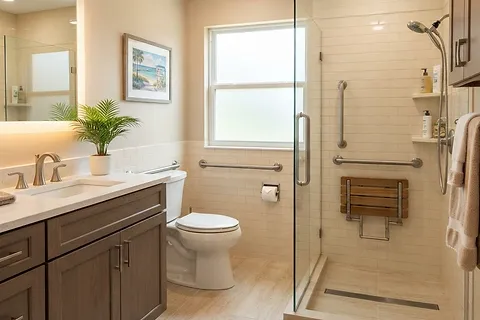
The best bathroom safety upgrades for older Florida homes are, in order of impact and affordability: (1) grab bars anchored to wall framing, (2) improved lighting, (3) slip-resistant flooring, (4) a handheld showerhead, (5) lever faucet handles, and (6) a curbless shower or accessible bathtub. You do not need to do all of these at once — start with the highest-impact, most affordable upgrades and work your way up as your needs and budget allow.
This article covers each upgrade in detail, explaining what it is, why it matters, who it is for, and what to consider when installing it in an older Florida home.
Table of Contents
- —Why Bathroom Safety Matters in Older Florida Homes
- —Upgrade 1: Grab Bars Anchored to Wall Framing
- —Upgrade 2: Improved Lighting
- —Upgrade 3: Slip-Resistant Flooring
- —Upgrade 4: Handheld Showerhead
- —Upgrade 5: Lever Faucet Handles
- —Upgrade 6: Curbless Shower or Accessible Bathtub
- —Who These Upgrades Are For
- —Who These Upgrades May Not Be For
- —Common Mistakes to Avoid
- —North Central Florida Considerations
- —Questions to Ask Your Contractor
- —Frequently Asked Questions
- —Schedule a Free Home Assessment
Why Bathroom Safety Matters in Older Florida Homes
The bathroom is one of the most dangerous rooms in the home, especially for older adults. Wet surfaces, hard fixtures, and tight spaces create fall hazards. According to the CDC, bathroom falls are a leading cause of injury among older adults.
Many homes in Gainesville, Ocala, and North Central Florida were built before 2015 and do not include bathroom safety features that are now standard in new construction. Older homes often have:
- —Step-in showers with high thresholds
- —No grab bars
- —Slippery tile or linoleum flooring
- —Poor lighting
- —Standard faucet handles (knobs that require twisting)
- —No handheld showerhead
- —Narrow doorways
These features can make the bathroom difficult and dangerous to use as you age. The good news is that most bathrooms can be upgraded for safety without a full remodel. The upgrades below are listed in order of impact and affordability, so you can prioritize the changes that will make the biggest difference.
Important note: These upgrades can reduce common hazards in the bathroom, but no modification can guarantee specific safety, fall-prevention, or medical outcomes. Each property and person's needs must be evaluated individually.
Upgrade 1: Grab Bars Anchored to Wall Framing
What It Is
Grab bars are metal bars installed on the bathroom wall to provide support when standing, sitting, or moving. Grab bars should be anchored to wall framing or blocking — not just drywall — to support the weight of a person.
Why It Matters
Grab bars provide support where you need it most: next to the toilet, at the shower entry, and inside the shower. A properly installed grab bar can help you maintain balance and prevent falls.
Who It Is For
Grab bars are for anyone who wants to improve bathroom safety. They are especially important for:
- —People with mobility challenges
- —People who are planning to age in place
- —People recovering from surgery or illness
- —People who want to prevent falls
What to Consider
- —Anchoring: Grab bars must be anchored to wall framing or blocking, not just drywall. This may require opening a section of drywall to add blocking.
- —Location: Grab bars should be installed where you need support: next to the toilet (side wall and/or behind), at the shower entry, and inside the shower (back wall and/or side wall).
- —Height: The height of grab bars depends on the person using them. A professional installer can help you determine the right height.
- —Suction-cup grab bars: Do not use suction-cup grab bars as a permanent solution. They are not rated for body weight and can fail without warning. See our article on grab bar installation problems for more information.
Cost Considerations
Grab bar installation is typically the most affordable bathroom safety upgrade. The cost depends on the number of grab bars, the wall type (drywall vs. tile), and whether wall framing needs reinforcement.
Upgrade 2: Improved Lighting
What It Is
Improved lighting includes adding or upgrading light fixtures in the bathroom to provide better visibility. This may include overhead lighting, vanity lighting, and task lighting in the shower area.
Why It Matters
Good lighting is essential for bathroom safety. Poor lighting can make it difficult to see hazards, read medication labels, or navigate the bathroom at night. As we age, our eyes need more light to see clearly, making good lighting even more important.
Who It Is For
Improved lighting is for everyone, but it is especially important for:
- —Older adults whose eyes need more light
- —People who use the bathroom at night
- —People with vision impairments
What to Consider
- —Brightness: The bathroom should be well-lit, with lighting at the vanity, in the shower, and overhead. Consider using LED bulbs, which are bright, energy-efficient, and long-lasting.
- —Night lighting: Install a night light or motion-activated light to illuminate the path to the bathroom at night.
- —Shower lighting: Add a waterproof light in the shower area if there is not one already.
- —Dimmer switches: A dimmer switch allows you to adjust the lighting level, which can be useful for nighttime bathroom visits.
Cost Considerations
Lighting upgrades are relatively affordable, especially if the electrical wiring is already in place. The cost increases if new wiring or fixtures are needed.
Upgrade 3: Slip-Resistant Flooring
What It Is
Slip-resistant flooring is flooring with a textured or non-slip surface that provides better traction when wet. Options include slip-resistant tile, vinyl flooring with a textured surface, or non-slip coatings applied to existing flooring.
Why It Matters
Wet bathroom floors are a leading cause of falls. Slip-resistant flooring provides better traction, reducing the risk of slipping on wet surfaces. This is especially important in the shower area and near the toilet and sink.
Who It Is For
Slip-resistant flooring is for everyone, but it is especially important for:
- —People with mobility challenges
- —Older adults who are at risk of falls
- —People who use the bathroom barefoot or in socks
What to Consider
- —Tile vs. vinyl: Slip-resistant tile is a good option for wet areas. Vinyl flooring with a textured surface is softer underfoot and provides good traction. Both are available in a range of styles and prices.
- —Non-slip coatings: If you do not want to replace your flooring, non-slip coatings can be applied to existing tile to improve traction. These coatings are less durable than replacing the flooring but can be a cost-effective interim solution.
- —Rugs and mats: Non-slip bathroom rugs and mats can provide additional traction, but they can also be a trip hazard if they move. Use rugs with non-slip backing and secure them in place.
Cost Considerations
Slip-resistant flooring costs depend on the material and the size of the bathroom. Vinyl flooring is typically less expensive than tile. Non-slip coatings are the most affordable option but are less durable.
Upgrade 4: Handheld Showerhead
What It Is
A handheld showerhead is a showerhead attached to a hose that can be held in the hand, mounted on a adjustable bar, or mounted on the wall. It allows you to direct the water where you need it.
Why It Matters
A handheld showerhead makes showering easier and safer by allowing you to:
- —Sit while showering (with a shower chair)
- —Wash specific areas without standing
- —Control the water direction and flow
- —Rinse the shower area more easily
Who It Is For
A handheld showerhead is for everyone, but it is especially useful for:
- —People who use a shower chair or bench
- —People who have difficulty standing for long periods
- —People who want to wash specific areas without standing
- —Caregivers who assist with bathing
What to Consider
- —Adjustable bar: Mount the handheld showerhead on an adjustable bar so it can be moved up and down to accommodate different heights and seated positions.
- —On/off switch: Some handheld showerheads have an on/off switch on the handle, which allows you to turn off the water without reaching for the faucet. This is useful for people who are seated.
- —Water pressure: Choose a showerhead with adjustable spray patterns so you can control the water pressure and flow.
- —Grab bar combination: Some adjustable bars double as grab bars, providing both a showerhead mount and support. Make sure the bar is rated as a grab bar if you plan to use it for support.
Cost Considerations
A handheld showerhead with an adjustable bar is a relatively affordable upgrade, especially if the plumbing is already in place. The cost depends on the showerhead model and whether a new water supply line is needed.
Upgrade 5: Lever Faucet Handles
What It Is
Lever faucet handles are faucet handles that you push or pull to turn on and off, rather than twist. They are easier to operate than traditional knob handles, especially for people with arthritis or limited hand strength.
Why It Matters
Traditional knob faucet handles require twisting and gripping, which can be difficult for people with arthritis, limited hand strength, or limited mobility. Lever handles can be operated with a push or pull of the wrist or elbow, making them easier to use for everyone.
Who It Is For
Lever faucet handles are for everyone, but they are especially important for:
- —People with arthritis or limited hand strength
- —People who have difficulty gripping or twisting
- —People who want to make the bathroom easier to use
What to Consider
- —Sink and shower: Replace both sink and shower faucet handles with lever handles for consistency throughout the bathroom.
- —Single-handle vs. double-handle: Single-handle faucets (one lever controls both hot and cold water) are easier to operate than double-handle faucets (separate hot and cold handles).
- —Temperature control: Consider a faucet with a temperature limit stop to prevent scalding. This is especially important for older adults who may have reduced sensitivity to heat.
- —ADA-compliant: ADA-compliant lever faucets are designed to be easy to operate with one hand, without tight grasping, pinching, or twisting.
Cost Considerations
Lever faucet handles are an affordable upgrade, especially if you are replacing the handles only and not the entire faucet. The cost increases if you need to replace the entire faucet or add a temperature control valve.
Upgrade 6: Curbless Shower or Accessible Bathtub
What It Is
A curbless shower is a shower with no threshold or step at the entry. An accessible bathtub is a bathtub with a low threshold, grab bars, and a handheld showerhead. Both options make bathing easier and safer for people with mobility challenges.
Why It Matters
A curbless shower eliminates the threshold that can be a trip hazard when entering or exiting the shower. An accessible bathtub provides support and makes bathing easier for people who prefer bathing in a tub. Both are significant upgrades that can make a big difference in bathroom safety.
Who It Is For
A curbless shower or accessible bathtub is for:
- —People with mobility challenges who have difficulty stepping over a threshold
- —People who use a wheelchair, walker, or shower chair
- —People who are planning to age in place and want to future-proof their bathroom
- —People who want a modern, accessible bathroom
What to Consider
- —Curbless shower vs. walk-in tub: See our article on walk-in tubs vs. curbless showers for a detailed comparison of the two options.
- —Slab foundation: Many homes in North Central Florida have slab foundations, which affect curbless shower installation. Creating a curbless shower on a slab may require cutting and re-sloping the concrete. See our article on curbless shower costs for more information.
- —Space: Curbless showers need enough space for the water to be contained by the shower area and slope. Accessible bathtubs need space for the tub and a clear area for entry.
- —Permits: Curbless shower and accessible bathtub installations require plumbing permits in Florida.
Cost Considerations
A curbless shower or accessible bathtub is the most expensive bathroom safety upgrade on this list. The cost depends on the scope of work, the materials, the foundation type, and whether plumbing needs to be moved. For specific pricing, see our Costs & Planning page or schedule a free home assessment.
Who These Upgrades Are For
These bathroom safety upgrades are for:
- —Homeowners in older Florida homes who want to improve bathroom safety
- —People who are planning to age in place and want to make their bathroom safer
- —People who are helping a family member or parent make their home safer
- —People who want to prioritize safety upgrades based on impact and affordability
Who These Upgrades May Not Be For
These upgrades may not be for:
- —People who are moving soon and do not want to invest in their current home
- —People who need a full bathroom remodel and want to do everything at once
- —People who are looking for ADA compliance for a commercial property (ADA requirements are different from residential upgrades)
Common Mistakes to Avoid
1. Using Suction-Cup Grab Bars
Suction-cup grab bars are not rated for body weight and can fail without warning. Use grab bars anchored to wall framing for any permanent installation. See our article on grab bar installation problems for more information.
2. Not Anchoring Grab Bars to Framing
Grab bars must be anchored to wall framing or blocking, not just drywall. Drywall anchors can pull out of the wall when weight is applied. A professional contractor can ensure grab bars are properly anchored.
3. Skimping on Lighting
Good lighting is one of the most affordable and impactful bathroom safety upgrades. Do not skip lighting improvements because they seem less important than grab bars or flooring. Good lighting helps you see hazards, read labels, and navigate the bathroom safely.
4. Not Considering Slab Foundations
If your home has a slab foundation (common in North Central Florida), curbless shower installation is more complex and expensive. Make sure your contractor evaluates your foundation type before providing a quote.
5. Doing Everything at Once
If you are on a budget, you do not need to do all the upgrades at once. Start with the highest-impact, most affordable upgrades (grab bars, lighting, slip-resistant flooring) and work your way up to the more expensive upgrades (curbless shower, accessible bathtub) as your needs and budget allow.
North Central Florida Considerations
Slab Foundations
Many homes in Gainesville, Ocala, and surrounding communities have slab foundations. This affects curbless shower installation (which may require cutting and re-sloping the concrete) and grab bar installation (which is unaffected by the foundation type but may require opening drywall to add blocking).
Older Housing Stock
Many homes in Alachua and Marion counties were built before 2015 and do not include bathroom safety features that are now standard in new construction. Older homes may have outdated plumbing, electrical, or structural elements that need to be addressed before safety upgrades can be made.
Permit Requirements
Most bathroom safety upgrades that involve plumbing, electrical, or structural changes require permits in Florida. This includes curbless shower installation, accessible bathtub installation, and electrical work for improved lighting. Grab bar installation typically does not require a permit. We handle the permit process as part of our service.
Humidity and Moisture
Florida's humid climate can affect bathroom materials. Slip-resistant flooring, grab bars, and fixtures should be chosen with Florida's humidity in mind. Stainless steel and chrome fixtures resist corrosion in humid environments.
Questions to Ask Your Contractor
- —Which upgrades are most important for my bathroom and my needs?
- —How will you anchor grab bars to wall framing?
- —What type of slip-resistant flooring do you recommend for my bathroom?
- —Can you install a handheld showerhead on an adjustable bar that doubles as a grab bar?
- —What type of lighting should I install in my bathroom?
- —Do I need a curbless shower, or would grab bars and a handheld showerhead be sufficient?
- —Does my home have a slab foundation, and how does that affect curbless shower installation?
- —What permits are required for these upgrades?
- —How much will each upgrade cost, and can I prioritize based on my budget?
Frequently Asked Questions
Which bathroom safety upgrade should I start with?
If you are on a budget, start with grab bars anchored to wall framing and improved lighting. These are the most affordable and highest-impact upgrades. After that, add slip-resistant flooring and a handheld showerhead. Save the curbless shower or accessible bathtub for when your needs and budget allow.
Can I install grab bars myself?
You can install grab bars yourself if you have experience with drywall, tile, and framing work. However, we recommend hiring a professional contractor because improper installation can be dangerous. A professional ensures grab bars are anchored to framing, installed at the correct height and location, and installed without damaging tile or drywall.
How much do bathroom safety upgrades cost?
The cost varies widely depending on the upgrades you choose. Grab bars and improved lighting are the most affordable upgrades. Slip-resistant flooring and handheld showerheads are moderate-cost upgrades. Curbless showers and accessible bathtubs are the most expensive upgrades. For specific pricing, schedule a free home assessment.
Do I need a permit for bathroom safety upgrades?
Most bathroom safety upgrades that involve plumbing, electrical, or structural changes require permits in Florida. This includes curbless shower installation, accessible bathtub installation, and electrical work for improved lighting. Grab bar installation typically does not require a permit. We handle the permit process as part of our service.
Can I do bathroom safety upgrades myself?
Some bathroom safety upgrades (like grab bars, handheld showerheads, and improved lighting) can be done by a handy homeowner. However, we recommend hiring a professional contractor for upgrades that involve plumbing, electrical, or structural work (like curbless showers, accessible bathtubs, and slip-resistant flooring). Improper installation can be dangerous and may not meet building code requirements.
Schedule a Free Home Assessment
The best way to determine which bathroom safety upgrades are right for your home is a free, no-pressure home assessment. We will walk through your bathroom with you, discuss your needs and goals, and recommend specific upgrades based on what we find.
Schedule a free home accessibility assessment or call us at 352-756-3038. We serve homeowners throughout Gainesville, Ocala, and the surrounding communities in Alachua and Marion counties.
For information about our accessible bathroom services, visit our accessible bathrooms page. For more information about costs and planning, visit our Costs & Planning page.