
The Short Answer
The most common problems with grab bar installation are: (1) using suction-cup or tension-mounted grab bars that are not anchored to wall framing and can fail under weight, (2) installing grab bars in the wrong location or at the wrong height, and (3) failing to reinforce the wall framing before installation. A grab bar that is not properly anchored to wall framing can pull out of the wall when you need it most — creating a false sense of security that is more dangerous than having no grab bar at all.
This article explains the common problems homeowners encounter with grab bar installation, how to avoid them, and what to look for when hiring a contractor.
Table of Contents
- —Why Grab Bar Installation Goes Wrong
- —The Most Common Problems
- —Suction-Cup Grab Bars: A Dangerous False Solution
- —Who This Article Is For
- —Who This Article Is Not For
- —How to Avoid Grab Bar Installation Problems
- —Questions to Ask Your Contractor
- —North Central Florida Considerations
- —Frequently Asked Questions
- —Schedule a Free Home Assessment
Why Grab Bar Installation Goes Wrong
Grab bar installation seems simple — drill a few holes, screw in the bar, and you are done. But proper grab bar installation requires more than attaching a bar to the wall. The bar must be anchored to wall framing or blocking that can support the weight of a person. The location and height must be appropriate for the person using it. And the bar must be installed in a location where it will actually be useful — not just where it is easiest to install.
When grab bars are installed incorrectly, they can:
- —Pull out of the wall when weight is applied
- —Be installed in locations where they are not useful or are in the way
- —Be installed at heights that are uncomfortable or unsafe
- —Damage tile, drywall, or plumbing behind the wall
- —Create a false sense of security that leads to accidents
The Most Common Problems
1. Suction-Cup and Tension-Mounted Grab Bars
Suction-cup grab bars attach to the wall with vacuum suction. Tension-mounted grab bars fit between the floor and ceiling or between two walls. Neither type is anchored to wall framing.
The problem: Suction-cup and tension-mounted grab bars are designed for temporary use, not for supporting body weight. They can fail without warning, especially on smooth surfaces like tile. A person who relies on a suction-cup grab bar for support can fall when the bar detaches from the wall.
The solution: Use grab bars that are permanently anchored to wall framing or blocking. If you need a temporary solution (for example, while recovering from surgery), use suction-cup bars with extreme caution and do not rely on them for full body weight. Replace them with permanently installed grab bars as soon as possible.
2. Improper Anchoring to Drywall Only
Some grab bars are installed using anchors that expand behind drywall. These anchors can hold light loads but are not rated for the weight of a person.
The problem: Drywall anchors can pull out of the wall when significant weight is applied. A grab bar that is anchored only to drywall may feel secure when you push on it lightly, but it can fail when you actually need it to support your weight.
The solution: Grab bars must be anchored to wall studs, blocking, or framing. This may require opening a section of drywall to add blocking (horizontal framing members) between the studs, then patching the drywall. Surface-mounted grab bars with heavy-duty anchors may be appropriate in some cases, but they may not support the same weight as framing-anchored bars.
3. Installing Grab Bars in the Wrong Location
Grab bars are only useful if they are installed where you actually need them. Installing a grab bar in the wrong location can make it useless or even dangerous.
The problem: Common location mistakes include:
- —Installing grab bars on the wrong wall (for example, on the side wall when you need one on the back wall)
- —Installing grab bars at the wrong height (too high or too low for the person using them)
- —Installing grab bars that are too short or too long for the space
- —Installing grab bars where they interfere with other fixtures or doors
The solution: Work with a contractor who evaluates your needs and the bathroom layout before recommending grab bar locations. The ideal location and height depend on the person using the bar, their height, their mobility, and the bathroom layout. A professional assessment ensures grab bars are installed where they will be most useful.
4. Damaging Tile, Drywall, or Plumbing
Installing grab bars on tile walls requires special tools and techniques. Drilling through tile without the right equipment can crack or shatter the tile. Drilling into a wall without knowing what is behind it can damage plumbing or electrical lines.
The problem: A contractor or DIY installer who is not experienced with tile may crack or damage tile during installation. Drilling into a wall without checking for plumbing or electrical can cause leaks, shorts, or other damage.
The solution: Use a contractor who is experienced with grab bar installation on tile and drywall. At PRCnow, we use special drill bits and techniques to minimize tile damage, and we check for plumbing and electrical before drilling.
5. Not Reinforcing Wall Framing
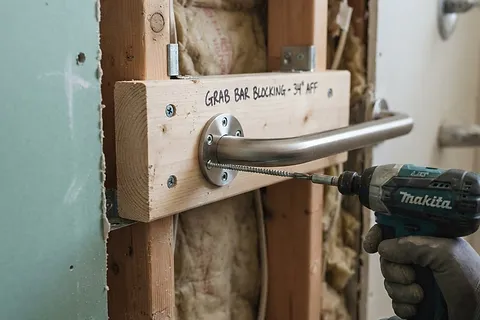
Even when grab bars are anchored to wall studs, the studs may not be in the right location for optimal grab bar placement. In some cases, blocking (horizontal framing members) needs to be added between the studs to provide a secure anchor point.
The problem: If the wall studs are not in the right location for the grab bar, the grab bar may be installed in a suboptimal location or anchored to drywall anchors instead of framing. This compromises the safety of the grab bar.
The solution: A professional installer will evaluate the wall framing and add blocking if needed. This may require opening a section of drywall, adding horizontal framing members between the studs, and patching the drywall. The result is a grab bar that is securely anchored to framing, no matter where the studs are located.
Suction-Cup Grab Bars: A Dangerous False Solution
Suction-cup grab bars deserve special attention because they are widely sold and marketed as an easy, no-tools solution. They are available at pharmacies, big-box stores, and online retailers.
Why Suction-Cup Grab Bars Are Dangerous
Suction-cup grab bars attach to the wall with vacuum suction. They are designed for temporary use and are not rated for supporting body weight. The suction can fail due to:
- —Temperature changes (suction weakens in heat)
- —Moisture (suction weakens on wet surfaces)
- —Surface texture (suction does not work well on textured tile or walls)
- —Time (suction weakens over days and weeks)
- —Weight (suction fails when significant weight is applied)
A person who relies on a suction-cup grab bar for support can fall when the bar detaches from the wall. This is especially dangerous in a bathroom, where hard surfaces and water make falls more likely and more serious.
When Suction-Cup Grab Bars May Be Appropriate
Suction-cup grab bars may be appropriate as a temporary solution when:
- —You are recovering from surgery and need temporary support
- —You are renting and cannot permanently install grab bars
- —You are traveling and need temporary support in a hotel or vacation rental
If you use a suction-cup grab bar as a temporary solution, test it regularly, do not rely on it for full body weight, and replace it with permanently installed grab bars as soon as possible.
Who This Article Is For
This article is for homeowners who:
- —Are considering installing grab bars in their home
- —Have grab bars that were installed by a previous homeowner and want to verify they are safe
- —Are helping a family member or parent make their home safer
- —Want to understand what can go wrong with grab bar installation and how to avoid it
Who This Article Is Not For
This article is not for:
- —Commercial property owners who need ADA-compliant grab bar installation — ADA requirements are different from residential installation
- —People looking for medical advice about grab bar placement — we are a licensed contractor, not a medical professional. An occupational therapist can provide personalized recommendations for grab bar placement based on your specific needs.
How to Avoid Grab Bar Installation Problems
1. Hire a Professional Contractor
The best way to avoid grab bar installation problems is to hire a licensed contractor who is experienced with accessibility modifications. A professional contractor will:
- —Evaluate your wall framing and add blocking if needed
- —Install grab bars at the correct height and location for your needs
- —Use proper tools and techniques to minimize tile and drywall damage
- —Check for plumbing and electrical before drilling
- —Ensure grab bars are anchored to framing, not just drywall
2. Avoid Suction-Cup Grab Bars for Permanent Use
Do not use suction-cup grab bars as a permanent solution. They are not rated for supporting body weight and can fail without warning. If you currently have suction-cup grab bars, replace them with permanently installed grab bars anchored to wall framing.
3. Evaluate Your Needs Before Installation
Before installing grab bars, think about where you need support:
- —Where do you have difficulty standing or sitting? (next to the toilet, in the shower, at the entry)
- —Which hand do you prefer to use for support?
- —What height is comfortable for you?
A professional contractor can help you evaluate your needs and recommend the best locations for grab bars in your home.
4. Check Existing Grab Bars
If your home has grab bars that were installed by a previous homeowner, check them:
- —Are they anchored to wall framing? (Try pushing and pulling on the bar — if it moves, it may not be properly anchored)
- —Are they in useful locations?
- —Are they in good condition (no rust, loose mounting, or damage)?
If you are not sure whether your grab bars are safe, a professional contractor can inspect them and recommend repairs or replacement if needed.
Questions to Ask Your Contractor
- —How will you anchor the grab bars to wall framing?
- —Will you need to open the drywall to add blocking? If so, will you patch and paint the drywall?
- —How will you install grab bars on tile without cracking the tile?
- —Where do you recommend placing grab bars based on my needs and bathroom layout?
- —What height should grab bars be installed at for someone my height?
- —What weight rating do the grab bars you install have?
- —Are the grab bars you install rated for residential or commercial use?
North Central Florida Considerations
Tile Walls
Many bathrooms in Gainesville and North Central Florida homes have tile walls. Installing grab bars on tile requires special drill bits and techniques to avoid cracking or shattering the tile. A contractor experienced with tile installation can minimize damage and ensure a clean, professional installation.
Older Homes
Many homes in Alachua and Marion counties were built before 2015. Older homes may have plaster walls instead of drywall, which requires different installation techniques. Older homes may also have wall studs that are not in standard locations, requiring blocking to be added for proper grab bar anchoring.
Slab Foundations
Slab foundations do not directly affect grab bar installation (grab bars are wall-mounted, not floor-mounted), but they are worth noting because many homes in North Central Florida have slab foundations. If you are also considering floor-mounted grab bars or poles, the slab foundation provides a solid base.
Permit Requirements
Grab bar installation typically does not require a permit, but it depends on the scope of work and local jurisdiction. We confirm permit requirements for your specific project and location.
For more information about grab bar installation in your area, see our Gainesville and Ocala location pages.
Frequently Asked Questions
Are suction-cup grab bars safe?
No. Suction-cup grab bars are designed for temporary use and are not rated for supporting body weight. They can fail without warning, especially on tile or wet surfaces. We recommend permanently installed grab bars anchored to wall framing for any situation where the bar will be used for support.
Can grab bars be installed on tile walls?
Yes. Grab bars can be installed on tile walls using special drill bits designed for tile. The installation process requires care to avoid cracking or shattering the tile. A contractor experienced with tile installation can ensure a clean, professional installation.
How much weight can a properly installed grab bar support?
A grab bar anchored to wall framing or blocking should support at least 250 pounds, and many are rated for 500 pounds or more. The weight rating depends on the grab bar hardware, the anchoring method, and the wall framing. We use grab bars and anchoring methods rated for residential use.
Can I install grab bars myself?
You can install grab bars yourself if you have experience with drywall, tile, and framing work. However, we recommend hiring a professional contractor for grab bar installation because improper installation can be dangerous. A professional contractor ensures grab bars are anchored to framing, installed at the correct height and location, and installed without damaging tile, drywall, or plumbing.
Where should grab bars be installed in a bathroom?
The ideal locations for grab bars depend on the person using them, their height, their mobility, and the bathroom layout. Common locations include:
- —Next to the toilet (on the side wall and/or behind the toilet)
- —At the entry to the shower or tub
- —Inside the shower (on the back wall and/or side wall)
- —At the bathroom entry
A professional contractor can evaluate your needs and recommend the best locations for grab bars in your bathroom.
Schedule a Free Home Assessment
If you are considering grab bar installation, or if you want to verify that your existing grab bars are safe, schedule a free home assessment. We will evaluate your bathroom, recommend grab bar locations, and provide a written proposal.
Schedule a free home accessibility assessment or call us at 352-756-3038. We serve homeowners throughout Gainesville, Ocala, and the surrounding communities in Alachua and Marion counties.
For information about our grab bar and safety support services, visit our grab bars and safety supports page.