
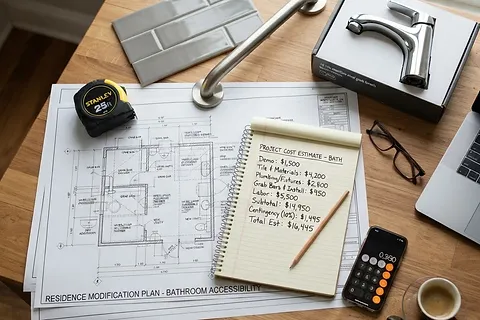
The Short Answer
The cost of aging-in-place remodeling in Gainesville depends almost entirely on the scope of work. A grab bar installation may cost a few hundred dollars, while a full bathroom remodel with a curbless shower may cost several thousand to tens of thousands of dollars. A whole-home accessibility project can cost significantly more. Every home and every project is different.
That is not a vague answer designed to avoid the question. It is the honest truth. The cost of accessibility remodeling varies based on your home's age, its construction, the scope of work, the materials you choose, and the conditions we discover during construction. In this article, we break down the factors that affect cost and explain what to expect for each type of project in Gainesville and North Central Florida.
Table of Contents
- —What Affects the Cost of Aging-in-Place Remodeling?
- —Cost Ranges by Project Type
- —Gainesville and North Central Florida Considerations
- —Who This Information Is For
- —Who This Information Is Not For
- —Common Mistakes That Increase Cost
- —Questions to Ask Your Contractor
- —Frequently Asked Questions
- —Schedule a Free Home Assessment
What Affects the Cost of Aging-in-Place Remodeling?
Several factors determine the cost of your project:
1. Scope of Work
The most significant factor is what you are actually doing. Installing grab bars is a one-day project. Remodeling a bathroom with a curbless shower, new flooring, and accessible fixtures is a multi-week project. The scope of work is the biggest driver of cost.
2. Age and Condition of Your Home
Many homes in Gainesville and North Central Florida were built before 2015. Older homes may have outdated plumbing, electrical systems, or structural elements that need to be addressed before accessibility modifications can be made. A home built in 1965 may need more preparation work than a home built in 2005.
3. Plumbing and Electrical Location
Moving a toilet, shower drain, or electrical fixture adds significant cost. Keeping fixtures in their current location is almost always less expensive. If your project involves moving plumbing or electrical, the cost will increase.
4. Foundation Type
Many Gainesville homes have slab foundations. This affects how curbless showers and plumbing modifications are done. Cutting and re-sloping a slab for a curbless shower drain adds cost compared to a home with a wood-frame floor where the plumbing is accessible from below.
5. Material and Finish Selections
Tile, fixtures, grab bars, and flooring come in a wide range of prices. Standard grab bars cost less than designer finish grab bars. Standard tile costs less than premium tile. We help you choose materials that balance quality, safety, and budget.
6. Permits and Inspections
Most accessibility remodeling work that involves plumbing, electrical, or structural changes requires permits in Florida. Permits and inspections are part of our process, and the cost is included in your written proposal. Permit requirements vary by jurisdiction, so we confirm the requirements for your specific location.
7. Conditions Discovered During Construction
During a remodel, we sometimes discover conditions that were not visible before construction began — outdated wiring, galvanized plumbing, water damage, or other issues. These conditions can affect the scope and cost of the project. We always discuss unexpected conditions with you before proceeding.
Cost Ranges by Project Type
Here is a general overview of what to expect for common aging-in-place projects. These are planning estimates, not actual quotes. An in-home assessment is necessary to provide accurate pricing for your specific home.
Grab Bar Installation
Grab bar installation is typically the most affordable accessibility improvement. The cost depends on the number of grab bars, the wall type (drywall vs. tile), and whether wall framing needs reinforcement. Surface-mounted grab bars with heavy-duty anchors are less expensive than grab bars that require opening the wall and adding blocking.
Curbless Showers
Curbless showers vary widely in cost depending on whether you use a prefabricated shower base or a custom tile shower, whether plumbing needs to be moved, and whether the slab needs to be cut for the drain. For more information, see our article on curbless shower costs.
Accessible Bathroom Remodels
A full accessible bathroom remodel is a significant investment. The cost depends on the scope of work, the age and condition of your home, and the materials you choose. Projects that involve moving plumbing or electrical fixtures cost more than projects that keep fixtures in their current location.
Ramps and Zero-Step Entries
Ramp costs depend on the length, materials (wood, aluminum, or composite), and site conditions. A short ramp at a single entry is less expensive than a long ramp with multiple landings. Code requirements for ramp grade (typically 1:12 slope) affect the length needed.
Doorway Widening
Doorway widening costs depend on whether the wall is load-bearing, the number of doorways, and whether electrical or plumbing is in the wall. Non-load-bearing walls are less expensive to widen than load-bearing walls.
Whole-Home Aging-in-Place Remodeling
Whole-home projects are the most comprehensive and expensive option. The cost depends on the number of rooms being modified, the scope of work in each room, and coordination across multiple trades. We recommend a Costs & Planning consultation to understand what is involved.
Gainesville and North Central Florida Considerations
Several factors are specific to Gainesville and North Central Florida:
Slab Foundations
Many homes in Gainesville, Ocala, and surrounding communities have slab foundations. This affects how curbless showers and plumbing modifications are done. On a slab, the shower floor must be sloped toward the drain, which may involve cutting and re-sloping the slab. This adds cost compared to homes with wood-frame floors.
Older Housing Stock
Many homes in Alachua and Marion counties were built before 2015. Homes built in the 1960s-1980s may have galvanized plumbing, outdated electrical, or other conditions that need to be addressed. Homes built in the 1990s-2000s may be in better condition but still lack accessibility features.
Permit Requirements
Permit requirements vary by jurisdiction. In Gainesville, permits are obtained through the City of Gainesville or Alachua County, depending on your location. In Ocala and Marion County, permits are obtained through the City of Ocala or Marion County. We handle the permit process as part of our service. For more information about your area, see our Gainesville and Ocala location pages.
Weather and Construction Timeline
Florida's weather can affect construction timelines, particularly during the summer months. Rain and heat can impact outdoor work like ramp installation. Indoor work is less affected by weather. We discuss timeline expectations during your home assessment.
Who This Information Is For
This article is for homeowners in Gainesville and North Central Florida who are:
- —Planning to age in place and want to understand what accessibility improvements might cost
- —Helping a family member or parent make their home safer
- —Evaluating whether to remodel or move to a different home
- —Researching accessibility remodeling costs before contacting a contractor
Who This Information Is Not For
This article is not for:
- —Homeowners looking for exact pricing without a home assessment — every home is different, and accurate pricing requires an in-person evaluation
- —People seeking ADA compliance for a commercial property — ADA requirements are different from residential accessibility modifications
- —Emergency medical equipment providers — we are a licensed contractor, not a medical equipment provider
Common Mistakes That Increase Cost
Not Getting a Home Assessment First
The biggest mistake homeowners make is accepting a quote over the phone or online without a home assessment. Without seeing your home, a contractor cannot accurately assess the scope of work, identify potential challenges, or provide a reliable estimate.
Choosing the Cheapest Option
The cheapest quote is not always the best value. A contractor who offers a very low price may be cutting corners on materials, workmanship, or permits. Accessibility work must be done correctly to be safe — a poorly installed grab bar or inadequately reinforced ramp can be dangerous.
Ignoring Underlying Conditions
If your home has outdated plumbing, electrical, or structural issues, ignoring them to save money can lead to bigger problems later. For example, installing a new shower over old, damaged plumbing may result in leaks and water damage that cost far more to repair.
Not Asking About Permits
Ask your contractor whether permits are included in the price. A contractor who skips permits may save money in the short term but can create problems with insurance, resale, and safety. Permitted work is inspected, which provides an additional layer of quality assurance.
Questions to Ask Your Contractor
Before hiring a contractor for aging-in-place remodeling, ask these questions:
- —What is included in the written proposal, and what is not included?
- —Are permits included in the price, or are they an additional cost?
- —Who is responsible for ordering and delivering materials?
- —What is the payment schedule, and when is final payment due?
- —How long will the project take, and what could cause delays?
- —Who will be on-site each day, and who is the project manager?
- —What happens if unexpected conditions are discovered during construction?
- —What permits and inspections are required for this project?
- —How will you protect the rest of my home during construction?
Frequently Asked Questions
Can you give me a price over the phone?
No, and you should be cautious of any contractor who offers a firm price without seeing your home. Every home is different, and the cost of accessibility remodeling depends on factors that can only be evaluated in person — your home's construction, the scope of work, and the conditions we may find during construction.
Does insurance pay for aging-in-place modifications?
In most cases, standard homeowners insurance does not pay for accessibility modifications. However, some government programs, veterans' benefits, or long-term care insurance may provide assistance. We recommend checking with your insurance provider and local agencies to understand what assistance may be available.
How do I know which modifications I need?
A home accessibility assessment is the best way to identify which upgrades will make the most difference for your home. We walk through your home with you, discuss your concerns, and recommend specific improvements based on what we find. Schedule a free home assessment to get started.
Should I do all the work at once or phase it over time?
This depends on your budget, your needs, and the scope of work. Some homeowners prefer to address the most urgent needs first and plan additional work for later. Others prefer to complete everything at once to minimize disruption. We can help you prioritize during your home assessment.
Schedule a Free Home Assessment
The best way to understand what your aging-in-place remodeling project will cost is a free, no-pressure home assessment. We will walk through your home with you, discuss your goals, and provide a written proposal with itemized pricing.
Schedule a free home accessibility assessment or call us at 352-756-3038. We serve homeowners throughout Gainesville, Ocala, and the surrounding communities in Alachua and Marion counties.
For more information about costs and planning, visit our Costs & Planning page.